

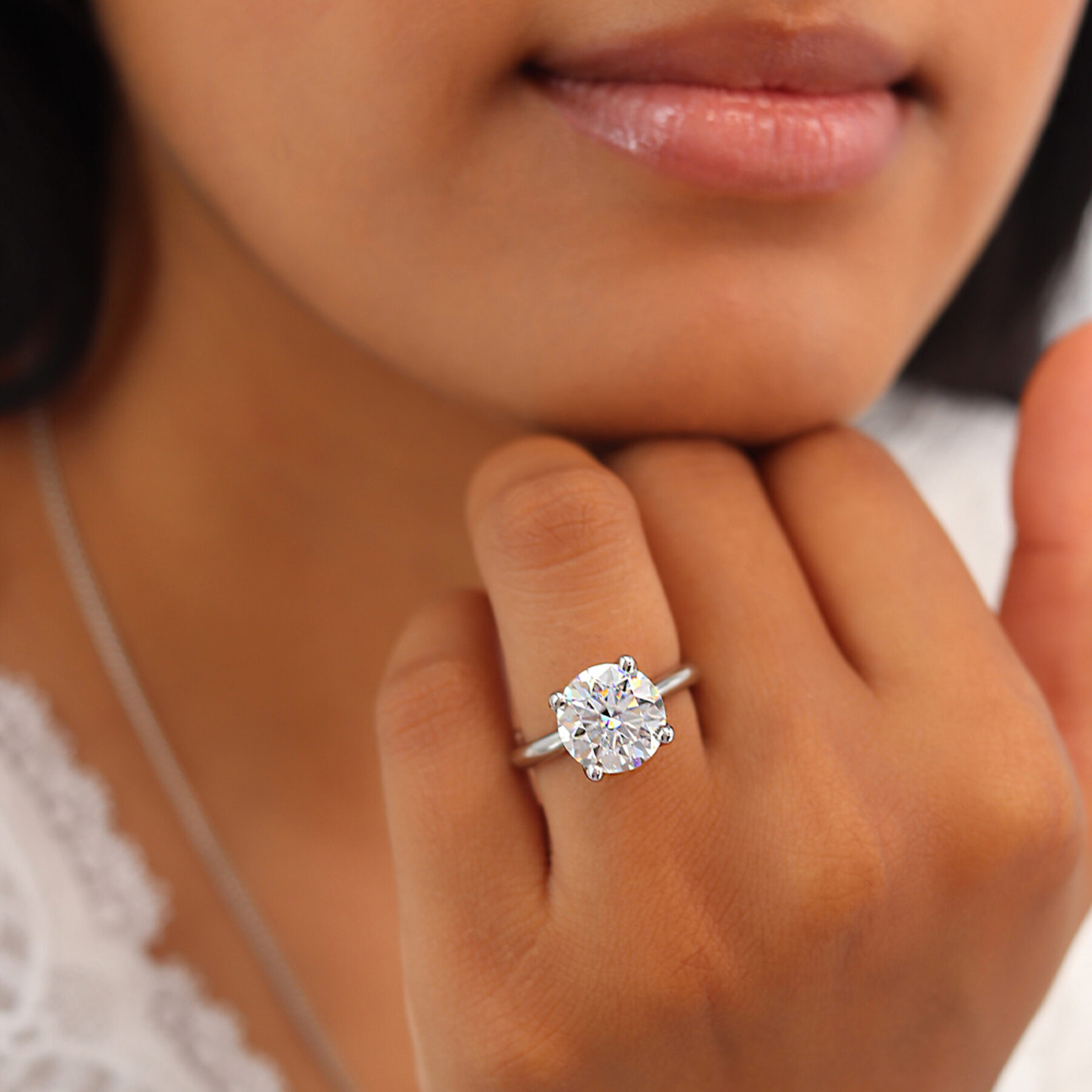
There is a quiet confidence to emerald cut diamonds that sets them apart from more traditionally brilliant styles. Instead of relying on scattered sparkles, they create a smooth, reflective glow often described as a “hall of mirrors” effect. This distinctive elegance has made them a favourite among those who prefer sophistication over flash. In contemporary jewellery design, Lily Arkwright has refined this aesthetic with precision and modern craftsmanship. Exploring the details behind Lily Arkwright emerald cut rings reveals why this mirror-like brilliance feels so captivating.
The Geometry Behind the Mirror Effect
Unlike brilliant cuts that prioritise scintillation, the emerald cut is defined by its step-cut faceting. These long, parallel facets are arranged in a stair-like pattern that guides light in a controlled, linear reflection.
Instead of breaking light into multiple flashes, the emerald cut produces broad flashes of light and dark contrast. This creates the signature mirror effect of smooth, elegant reflections that move across the surface of the stone rather than scattering outward. Lily Arkwright’s lab-grown emerald diamonds are carefully cut to maximise this optical behaviour, ensuring clean symmetry and precise facet alignment. Even the slightest deviation in proportion can affect the clarity of reflection, which is why precision is central to this design.
Why Clarity Matters More in Emerald Cuts
Because the emerald cut is open and transparent, it reveals more of the diamond’s interior than many other shapes. This makes clarity one of the most important factors in its overall appearance. Inclusions that might be hidden in a brilliant cut are often more visible here, which is why higher clarity grades are typically preferred. The payoff, however, is significant: when well-cut and clean, an emerald diamond has a glass-like depth that feels almost architectural. This is where lab-grown diamonds offer a distinct advantage. Lily Arkwright’s stones are selected for their consistency and purity, ensuring that the mirror effect remains uninterrupted and visually calm. The result is a diamond that feels refined rather than busy, with a clarity that enhances its sculptural beauty.
The Role of Proportion and Carat Weight
Emerald cut diamonds are known for their elongated shape, which naturally influences how size is perceived. A 1-carat emerald cut often appears larger than other shapes of the same weight due to its open table and extended surface area.
A 2-carat stone, meanwhile, amplifies this effect significantly, creating a bold yet refined presence on the hand. However, the appeal is not simply about size. It is about the proportion of the relationship between length, width, and depth, which determines how balanced the stone feels. Lily Arkwright’s designs focus on these proportions carefully, ensuring that each ring maintains elegance regardless of carat weight. The goal is not excess, but harmony between structure and light.
Settings That Enhance the Emerald Cut’s Elegance
The emerald cut thrives in settings that complement its clean geometry. Solitaire designs are particularly popular, allowing the stone’s linear facets to take centre stage without distraction.
For those seeking added detail, tapered baguette side stones or delicate pavé bands introduce subtle contrast without overwhelming the centre diamond. These elements enhance the sense of refinement while preserving the cut’s minimalist identity. Lily Arkwright’s settings are designed to frame rather than compete with the emerald cut, ensuring that the mirror-like sparkle remains the focal point of the design.
Final Thought
The allure of emerald cut diamonds lies not in dramatic sparkle, but in their controlled, reflective beauty. Their mirror-like surface creates a sense of depth and calm that feels distinctly modern yet timeless. Lily Arkwright’s collection captures this elegance with precision, combining expert craftsmanship with ethical lab-grown diamonds. The result is jewellery that feels intentional, balanced, and quietly extraordinary proof that true brilliance does not always need to shout to be seen.

